Introduction to TXcel
The quality of education that students receive plays one of the most important roles in determining their success and, as research indicates, is the most important reason for parents' choice of schools for their children.
School teacher evaluations have typically focussed on indicators of student achievement and used ‘value-added’ models. These have been criticised for lacking reliability and do not provide information on how or why students increase their performance or how to improve teachers’ effectiveness. The aim is to find powerful ways for teachers who wish to know more about how their teaching impacts their students and, in a confidential way, to recommendations about how to enhance that impact.
The TXcel model was developed to provide a scientifically strong measurement tool that provides teachers with diagnostic and confidential feedback on how to improve their teaching. The model draws on expertise from internationally renowned educational psychologists and researchers, Prof. Herb Marsh (Australian Catholic University), and Prof. John Hattie.
Purpose of TXcel
The TXcel feedback Portal assists junior and secondary school teachers to enhance their teaching in the context of the Australian Institute for Teaching and School Leadership (AITSL) professional standards.
Each teacher's online profile is personalised and confidential to them. The TXcel Portal provides reliable, diagnostic feedback on their teaching including:
- A user-friendly interface allowing teachers to easily administer surveys and view their results in 'real time'
- Confidential feedback provided to teachers
- Benchmarking and filter options allowing teachers to compare their scores to teacher-groups most meaningful to them
- A measure of students' perceptions of growth in teachers' classes across key outcomes
- Indicators of teachers' progress against the AITSL Standards
- Qualitative student feedback on areas that students find effective as well as areas for improvement
- Research-based strategies to enhance teaching aspects
- Personalised learning plan where teachers consolidate their results into an actionable PD plan
The information provided through the TXcel Portal is designed for:
- Personal reflection on teaching practices
- Professional development planning
- Identification of teaching strengths and opportunities for growth
- Understanding students' learning experiences
- Diagnosing of areas for further attention, as identified by specific classroom context and teaching style
- Reference when undertaking supervision or mentorship
Information derived from the TXcel Portal is not intended to provide a basis of comparisons between individual teachers or be used for performance appraisals. It is a professional learning tool designed to support the continued improvement of educators within the context of their teaching setting.
Teachers may benefit from discussing their results with colleagues, coaches, department heads or personal mentors to help identify appropriate learning objectives, resources, training and classroom strategies. However, it will be up to each teacher to decide whether they wish to share this information.
A recent survey regarding user experiences with the TXcel Portal found:
- 94% of teachers noted that the TXcel experience helped them produce a positive change in their teaching effectiveness
- 87% of teachers noted that they would recommend the TXcel experience to other teachers
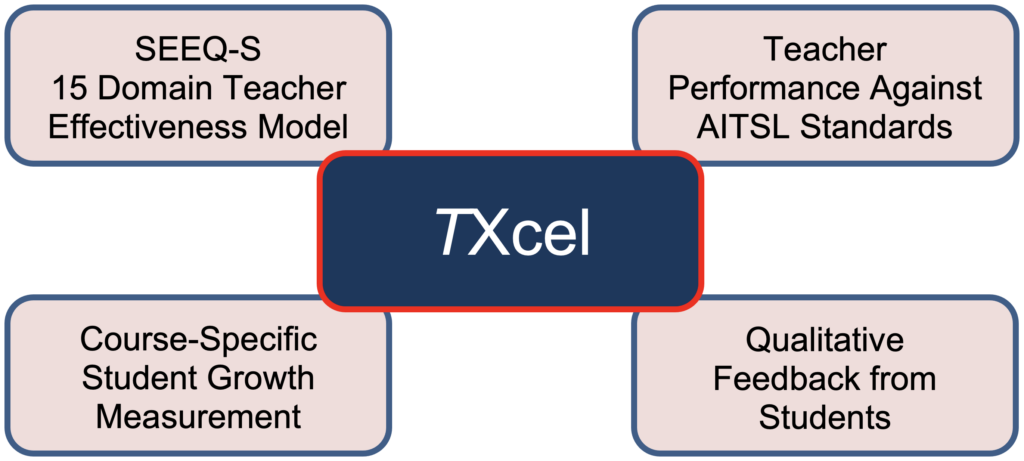
The TXcel Model
SEEQ-S Model
A core element of the TXcel model is the Student Evaluation of Educational Quality-Schools (SEEQ-S) instrument. This empirically validated survey was developed by lead educational psychologist and researcher, Prof. Herb Marsh (Australian Catholic University), in association with MMG Education.
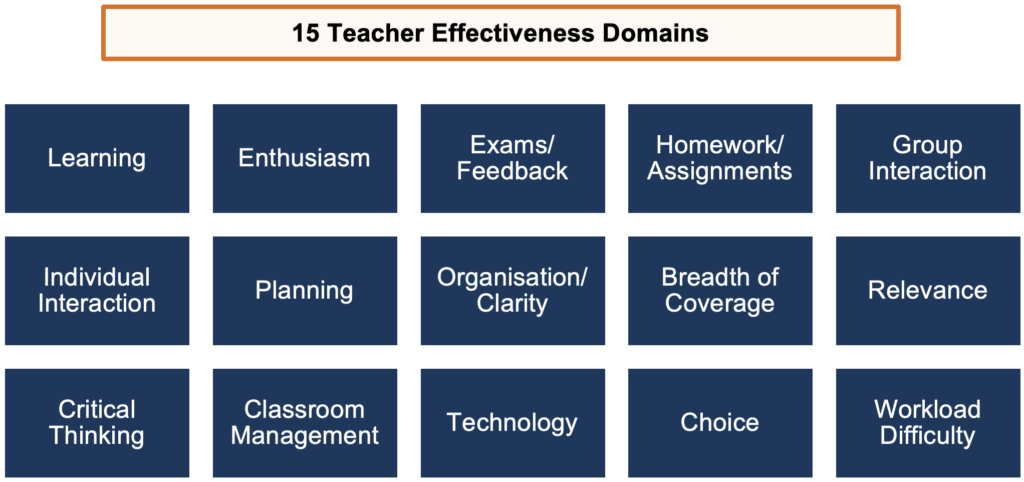
The SEEQ-S student evaluation survey (Marsh, Dicke and Pfeiffer, 2019) has been extended to include 15 dimensions that span Feldman’s (1976) multidimensional categories of teaching effectiveness. In doing so, the model creates an even more expansive and comprehensive coverage of modern teaching practices in schools today. Much attention has been given, in the development of the instrument to align with the AITSL Professional Standards for teachers.
Course Specific Student Growth
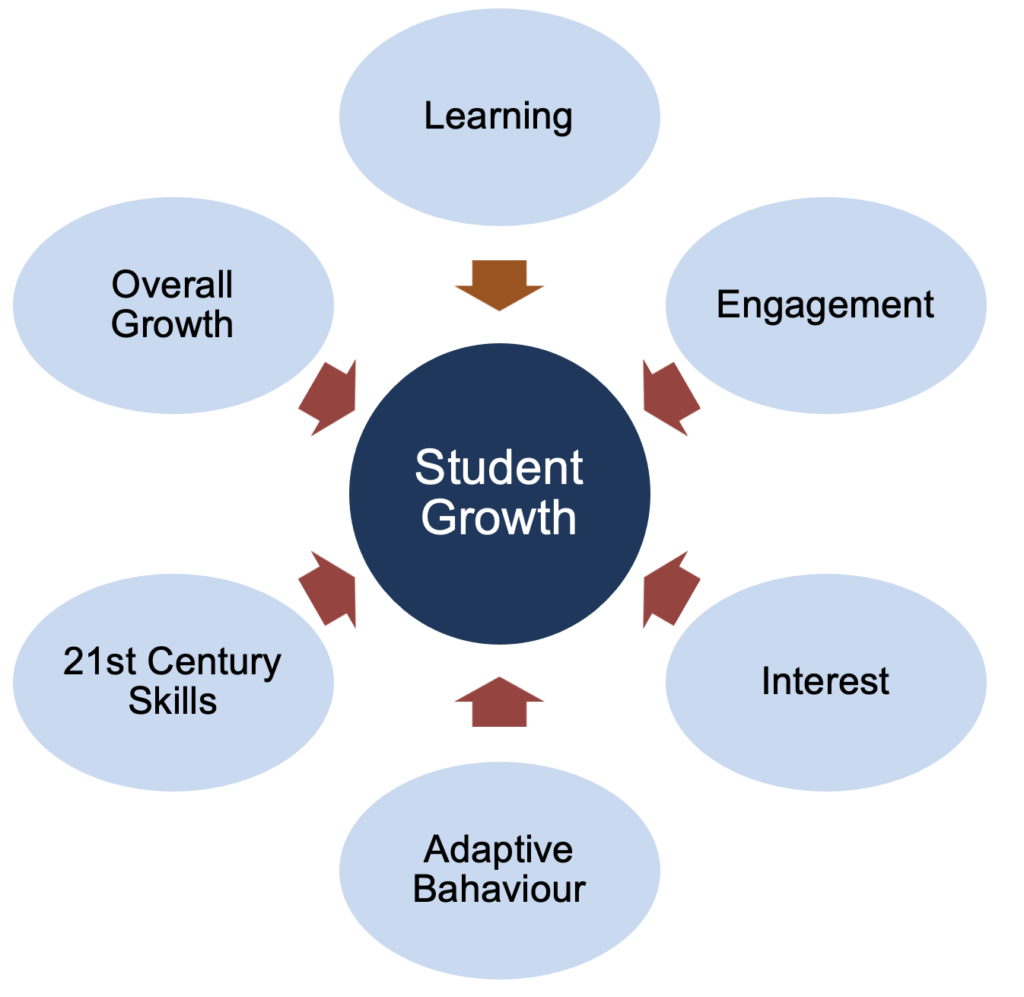
Effective teaching yields student benefits. If teachers are truly effective, we expect that students will make measurable progress during a course. To test this, the TXcel model includes a ‘Course-Specific Student Growth Questionnaire’ (working party consisting of Dr. J. Reeve, Prof. J. Hattie, Prof. H. Marsh, and Dr. T. Dicke), adopting a skills-based approach to conceptualise 6 course-specific student outcomes (see Cheon, Reeve and Moon, 2012).
AITSL Standards
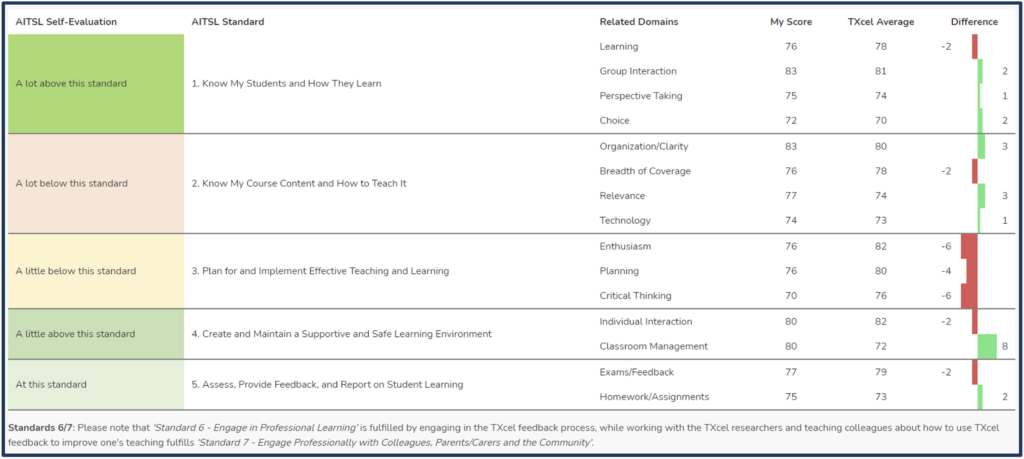
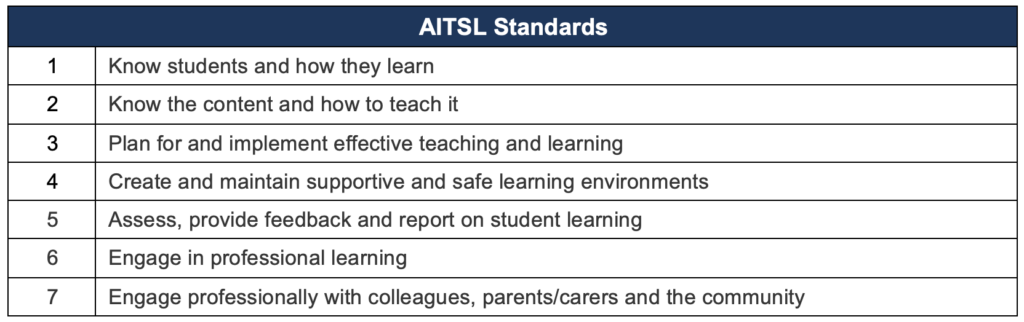
The Australian Professional Standards for Teachers (Australian Institute for Teaching and School Leadership, 2016) have been developed to guide teachers in their professional development.
The TXcel model has translated the AITSL Standards into practice by developing a benchmark scale (working party consisting of Prof. J. Hattie, Prof. H. Marsh, Dr. J. Reeve, and Dr. T. Dicke). Teachers are asked to self-rate items to reflect the standards aimed at classroom teaching.
Open-Ended Feedback from Students
The TXcel survey invites students to provide teachers with anonymous, written feedback with regard to course strengths and opportunities for improvement. In our experience, teachers have found that such feedback enriches the overall feedback process and provides valuable insights that compliment quantitative results in other areas.
TXcel Strategies
A comprehensive list of teaching strategies is described under each teaching domain. These strategies have been suggested and used by outstanding educators across a range of institutions and disciplines. Educators found these strategies most beneficial when, after considering all the ideas, they selected no more than three or four which appeared potentially most profitable and made a commitment to apply or adapt them to improve their teaching effectiveness.
TXcel Learning Plan
The TXcel ‘My Learning Plan’ tab enables teachers to consolidate the information in their confidential diagnostic report into a personalised professional learning plan for the upcoming professional development cycle.
Research shows that focussing professional development strategies yields more positive outcomes. Thus, the Learning Plan guides teachers to identify relevant teaching areas and strategies within these areas in focussed ways. Teachers are also able to journal reflections on their experiences, note variations to strategies and set personal goals in the notes section provided.
The Learning Plan is located in teachers’ confidential login application and is easily accessible using the tabs PDF export feature.
The TXcel Process
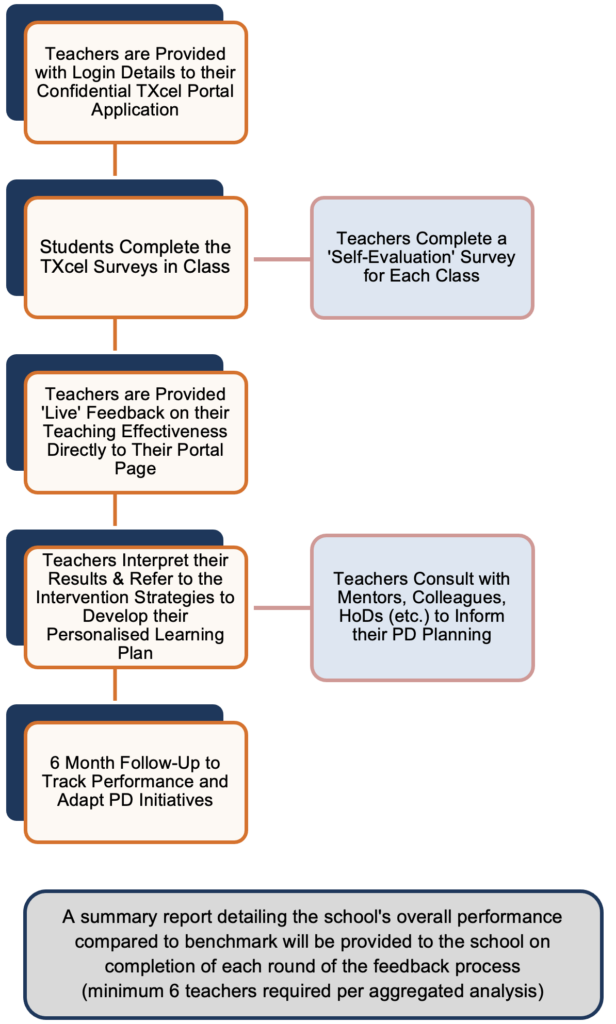
The following schematic details the TXcel process and how it is used to assist teaching staff with their continual improvement and professional development.
Testimonials – TXcel Portal
“It was really useful to be given strategies to address areas to improve on. These were easy to pick from and implement – and really effective too! I chose a strategy where I needed to catch up for at least 5 minutes with each of my focus students and built a much better understanding on how to help them once they felt they had been heard. Getting nice feedback from the students also helps to reminds teachers why they chose teaching in the first place too.”
- Teacher
“I found the TXcel process very good- easy and informative.”
- Head of Middle School/ Director of Studies
“I must say I was quite impressed with the design of your report”
- Head of Professional Practice and Learning
“This is outstanding reporting for the teacher feedback tool! ... The beginning of something very special for teachers to use in reflection to inform their practice. I would encourage every teacher to do this if, and when the opportunity arises. Fantastic!”
- Head of Department
“I found it amazing feedback. Very useful and small enough class sizes that I could read through all the comments.”
- Teacher
“I think that the survey is an excellent way of seeking feedback that we wouldn’t otherwise get from our students. Overall, I was very happy with the process and the feedback I received.”
- Teacher
“I found the results of the survey well-presented and well organised. I was able to use the results of the student survey for Graduate 2 confirmation evidence and reflection purposes.”
- Teacher
Example of Output from the Teacher Portal
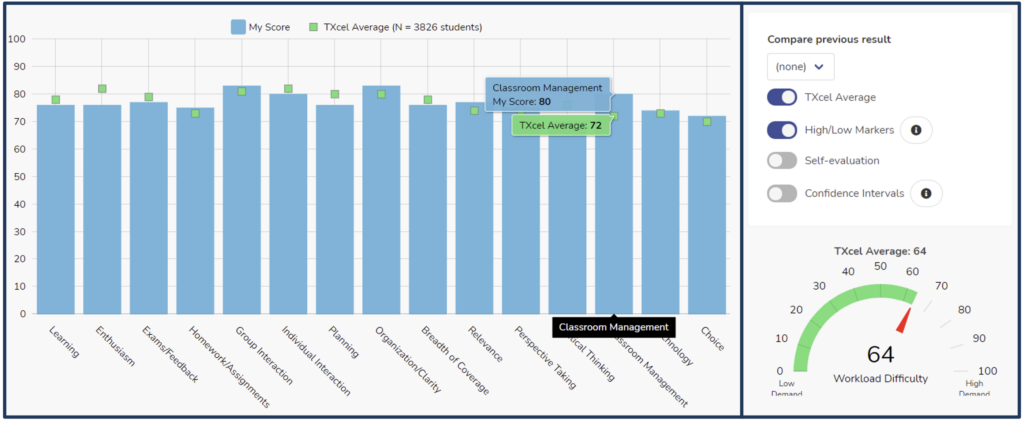
Teaching Domain Results
The overall Teaching Domains results show the teachers' overall scores for each of the 15 Teaching Domains for all of their classes. Teachers have the ability to display their scores compared to the following filters:
- TXcel Benchmark Average
- Previous Results (if the teacher has previously run the survey)
- High/Low Markers – Areas of personal strengths/weaknesses relative to other teachers (i.e. scores exceeding ± 1 standard deviation from all teachers' mean)
- The Teachers' Self Evaluation Score for each Domain
- Confidence Intervals
Individual Class Results
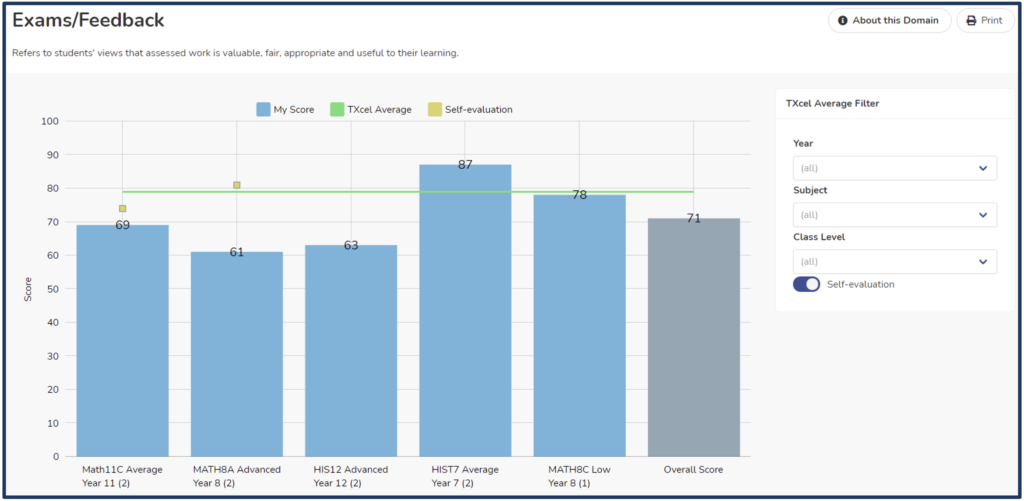
The Individual Class Results show the teachers' overall scores for each of their classes for a particular Teaching Domain (e.g. Exams/Feedback). Teachers have the ability benchmark their scores against the following filters:
- Year Group
- Subject Area (e.g. Mathematics, English, etc.)
- Class Level (e.g. Low, Intermediate, High)
- The Teachers' Self Evaluation Score for each Domain
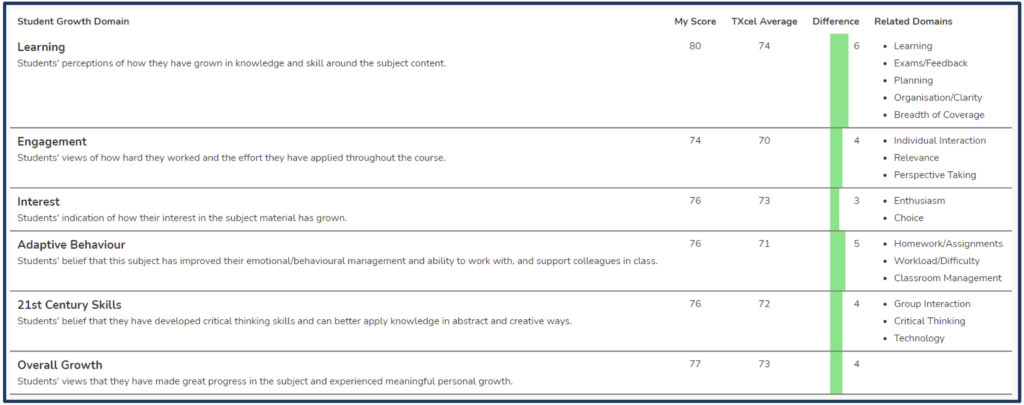
Student Growth Results
The Student Growth Results show teachers' scores for their students' growth compared to the TXcel Database average. Specific Teaching Domains are aligned to the 5 Growth Areas to assist with targeted strategies for improvement.
AITSL Teaching Standards Profile
The AITSL Teaching Standards Profile show teachers' scores for Teaching Domains that align with the first 5 AITSL teaching Standards compared to the TXcel Database average. Specific Teaching Domains are aligned to the AITSL Standards to assist with targeted strategies for improvement.